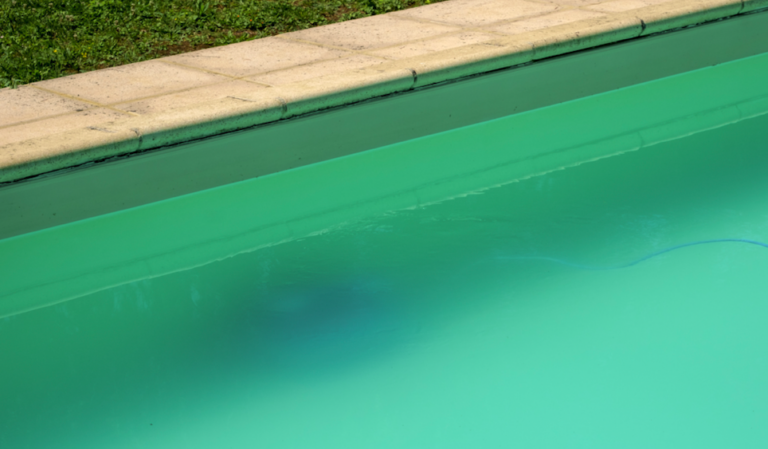
August heat and humidity are major reasons algae blooms spike in Indiana pools this time of year, and the fix is a combination of bringing the chlorine back into the proper range and correcting the underlying water chemistry. This guide breaks down exactly why late-summer algae happens, how to tell if you’re dealing with a quick fix or a deeper chemistry problem, and what to do about it before Labor Day weekend brings heavier pool use.
Why Algae Blooms Spike in Peak August Heat
Algae thrives in warm water, which is why prolonged stretches of 85–95°F air temperatures can create problems for Indianapolis pools. Warmer water speeds up algae reproduction, and it also speeds up how fast your pool burns through chlorine.
Here’s the chain reaction that plays out in almost every backyard pool during peak summer:
- Heat accelerates chlorine breakdown. UV exposure and high water temperatures cause free chlorine, which is the chlorine available to sanitize the water, to dissipate much faster than it does under cooler, less sunny conditions.
- Chlorine demand rises. More swimmers, more sunscreen, more organic debris (pollen, grass clippings, storm runoff) all consume chlorine that would otherwise be killing algae spores.
- A chlorine “demand gap” opens up. If your sanitizer level can’t keep pace with what’s being consumed, algae spores that are always present in the water get the opening they need to multiply.
- Humidity compounds the problem. High humidity slows evaporation, which sounds good, but it also means pools stay warmer overnight, giving algae less of a cool-down window to slow its growth cycle.
By the time a pool owner notices green or cloudy water, the algae bloom has usually already been building for several days.
Quick Fix vs. Real Prevention: What’s the Difference?
Most homeowners searching for algae solutions in August are looking for one of two things: a fast fix for water that’s already green, or a way to stop it from happening again. Both matter, but they’re not the same project.
The Quick Fix (Shock Treatment)
If your pool is already cloudy, green, or has visible algae on the walls or floor, a shock treatment is the immediate step:
- Test and record your current chlorine, pH, and alkalinity levels.
- Brush all pool surfaces, especially steps, corners, and behind ladders, to break up algae colonies.
- Shock the pool with a chlorine-based shock product at the dose recommended for the severity of the bloom.
- Run the filter continuously (24+ hours) until the water clears.
- Re-test and re-balance once chlorine demand has been satisfied.
This gets rid of what’s already there, but it doesn’t address why the bloom happened in the first place. Homeowners who only ever shock and never address water chemistry tend to see the same algae problem return every few weeks through August.
Real Prevention (Water Chemistry Correction)
Preventing late-summer algae comes down to keeping four numbers in range consistently, not just after a problem appears:
- Free Chlorine: 2–4 ppm. Aim for the higher end of this range in August, since heat accelerates burn-off.
- pH: 7.4–7.6. High pH reduces chlorine’s effectiveness against algae, even if your chlorine level looks fine.
- Total Alkalinity: 80–120 ppm. Keeps pH from swinging during hot, high-bather-load days.
- Cyanuric Acid (Stabilizer): 30–50 ppm. Protects chlorine from UV loss in direct August sun.
Pools that stay balanced in this range are much less likely to develop algae blooms, even during heat waves, because there’s no chlorine demand gap for spores to exploit.
Local Insight: Why This Hits Indianapolis Pools Especially Hard
Central Indiana’s late-summer pattern of high heat combined with humidity and afternoon thunderstorms is close to a worst-case scenario for pool chemistry. Storm runoff introduces organic material and can dilute chlorine and alkalinity levels within hours, right as heat is already pushing chlorine demand higher. Our service techs often see an increase in algae-related service calls in the Indianapolis area during the first two weeks of August, right after stretches of 90-degree days paired with a round of storms.
Signs You Need a Professional Water Chemistry Check
You don’t need to wait for green water to take action. Watch for:
- Cloudy or hazy water that doesn’t clear after normal filtration
- A noticeable chlorine smell (a sign of chloramines, not too much chlorine)
- Slippery texture on pool steps or walls
- Chlorine levels that test fine in the morning but disappear by afternoon
- Filter pressure climbing faster than usual
If you’re seeing two or more of these, it’s usually more efficient to have a professional test and rebalance the water than to keep guessing with test strips. For a deeper look at what else to watch for, see our post on 5 Signs Your Pool Needs a Service Call This Summer.
A Realistic Look at What Late-Summer Water Chemistry Correction Involves
For pool owners who prefer to have this handled rather than manage test strips through the rest of the season, weekly maintenance during August typically includes a full water panel test (not just chlorine and pH), shock treatment as needed, filter inspection, and adjustment of stabilizer levels to account for peak UV exposure. Our team can walk you through exact pricing for your pool’s size and current condition, since chemical needs vary significantly between a bloom that’s just starting and one that’s been building for a week. You can see what’s included in ongoing service through our Weekly Maintenance program.
Frequently Asked Questions
Why does my pool turn green faster in August than in June?
Warmer water and stronger UV exposure both increase how quickly chlorine breaks down, while algae reproduces faster in heat. The combination creates a bigger gap between chlorine demand and available sanitizer than earlier in the season.
How long does it take to clear an algae bloom?
A mild bloom caught early can clear in 24–48 hours with proper shock treatment and continuous filtration. A heavier, established bloom can take 3–5 days and may require a second shock treatment.
Can I just add more chlorine to fix algae permanently?
Adding chlorine clears an active bloom, but it won’t prevent the next one if pH, alkalinity, or stabilizer levels are out of range. Chlorine works far less effectively when pH is high, so balancing the whole chemistry picture matters more than chlorine alone.
Is it normal for chlorine to disappear within hours during summer?
Yes, this is common in unstabilized or under-stabilized pools during peak sun exposure. Correct cyanuric acid levels help chlorine hold up through a full day of Indiana summer sun.
Do storms really affect my pool’s chemistry?
Yes. Rain dilutes chlorine and alkalinity, and runoff can introduce organic debris that increases chlorine demand almost immediately, which is why algae problems often follow storms by a day or two.
Should I test my water myself or have it professionally tested?
Basic test strips are fine for a quick check, but a full professional water panel catches issues like stabilizer buildup or alkalinity drift that home kits often miss, especially useful once a pool has already had one algae bloom this season.
Get Ahead of the Next Bloom
Late-summer algae is preventable, but it takes more than reacting after the water turns green. If your pool has had more than one algae scare this season, or you’d rather not spend another weekend brushing walls and re-testing chemistry, schedule a consultation with our team and we’ll get your water chemistry back on track before the next heat wave hits.