Is It Too Late to Close Your Pool?
In most cases, no. Closing your pool in late October or even November is usually fine, and in some ways it is better. Cooler water slows algae growth, so pools closed later in the season often open cleaner in the spring. The real late-season risks have less to do with the calendar and more to do with keeping water moving, keeping up with maintenance, and making sure your automatic cover is working properly before winter.
This guide explains why a later closing often works in your favor, what actually puts a pool at risk this time of year, and how to keep your pool protected until closing day.
Why a Later Closing Often Works Out Better
It is easy to assume that closing as early as possible is the safest choice. For Indiana pools, that is usually not the case. A later pool closing can offer:
- Cleaner water in the spring: Algae thrives in warm water. Once water temperatures stay consistently below about 65 degrees, algae growth slows way down.
- Less algae trapped under the cover: Closing while the water is still warm gives algae ideal conditions to grow all winter.
- More scheduling flexibility: Many homeowners rush to close at the first cool weekend in September or early October. Later in the fall, there is often more flexibility to find a date that works for you.
If you have dealt with algae earlier in the season, our post on late-summer algae control explains why warm water makes such a difference.
What Actually Puts a Pool at Risk Late in the Season
Waiting to close is not the problem. These are the things worth paying attention to.
Water That Is Not Moving During a Hard Freeze
Water expands as it freezes, and pool plumbing and equipment are not built to handle that pressure. Moving water is much more resistant to freezing than standing water, though. A first frost or a single cold night is typically not an issue for a pool with the pump running.
The concern is an extended stretch of hard, below-freezing weather while water is sitting still in the lines or equipment.
Power Outages and Pump Failures
Because circulation is what protects an open pool in cold weather, anything that stops the pump matters. Watch for:
- Power outages during a cold snap
- Tripped breakers
- Pump failures or equipment that shuts off unexpectedly
If you lose power during freezing weather, check your equipment as soon as it comes back on. If something does not seem right, our pool repair team can take a look.
Falling Behind on Maintenance
An open pool still needs regular care until it is closed. If leaves pile up and chlorine levels drop, the water can turn before closing day and may need extra treatment before it can be winterized.
Keep up with:
- Skimming leaves and debris
- Emptying skimmer and pump baskets
- Keeping chlorine and pH balanced
If you would rather not keep up with it yourself, weekly maintenance can carry your pool through to closing day.
Automatic Cover Issues
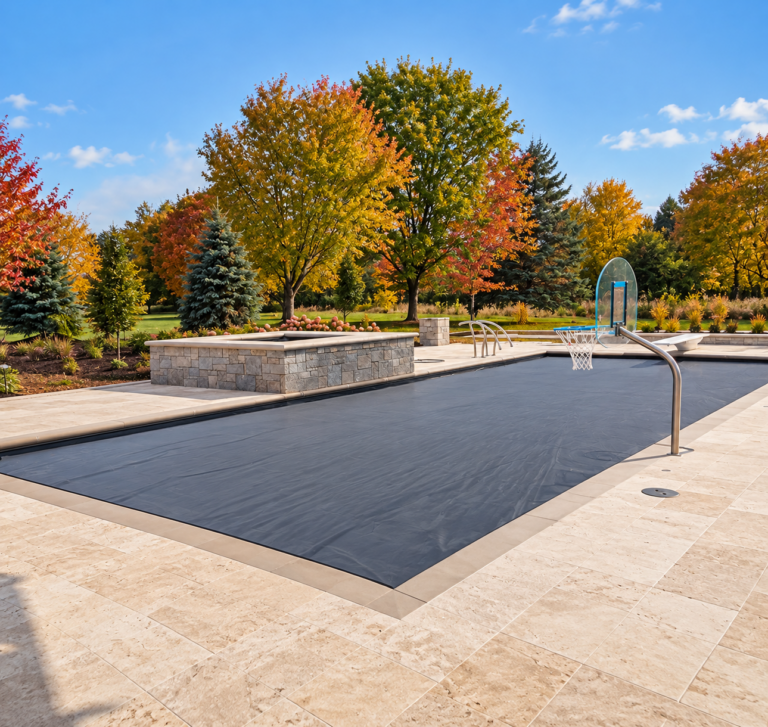
Most pools in the Indianapolis area have automatic covers. Before winter, the main question is whether yours is working properly. The cover should glide smoothly back and forth in its tracks.
Look for:
- Binding, catching, or uneven movement
- Leaves and debris in the tracks
- A motor that sounds strained
- Cover alignment problems
- Fabric wear, tears, or holes
These issues are much easier to handle before the weather turns. If you are not sure your cover will make it through another season, our guide on pool cover damage and when to repair vs. replace can help you decide, or you can learn more about our pool cover services.
Real World Insight From the Field
At Barton Pool Company, we hear from homeowners every fall who are worried they waited too long to close. In most cases, the pool is in great shape. The water is cool, the pump has been running, and the closing goes smoothly.
The pools that need extra attention are usually the ones where:
- Maintenance fell off in the final weeks
- Leaves and debris built up in the water
- The automatic cover was not operating the way it should
What to Do If Your Pool Is Still Open
If you have not closed your pool yet, here is how to keep it protected until your appointment:
- Keep the pump running so water keeps circulating, especially on cold nights
- Check your equipment after any power outage or tripped breaker
- Continue skimming leaves and emptying baskets
- Keep chlorine and pH balanced
- Run your automatic cover through a full open and close cycle and clear debris from the tracks
- Do not drain the pool or try to blow out lines yourself unless you know your system
- Schedule your closing so you have a date on the calendar
FAQ: Closing Your Pool Late in the Season
Is November too late to close a pool in Indiana?
Usually not. Many Indiana pools are closed in November without any issues. The key is keeping the water circulating and the pool maintained until closing day.
Is it better to close a pool early or late?
For water quality, later is generally better. Closing while the water is still warm gives algae a chance to grow under the cover. Waiting until water temperatures stay below about 65 degrees helps the pool open cleaner in the spring.
What temperature should I close my pool at?
Many pool professionals recommend closing once water temperatures stay consistently below about 65 degrees. In central Indiana, that often happens in mid to late October.
Will my pipes freeze on the first frost?
Typically not, as long as your pump is running and water is moving. The bigger concern is an extended stretch of hard, below-freezing weather, or a power outage that stops circulation during a cold snap.
Can I keep running my pump to prevent freezing?
Yes. Keeping water moving is the main way an open pool is protected in cold weather. Just make sure your pump and power are reliable, and check the system after any outage.
Will my pool turn green if I close it late?
It is actually less likely than closing early, since cooler water slows algae. Problems usually come from leaves and debris sitting in the water or chlorine levels dropping, so keep up with maintenance until closing day.
What should I check on my automatic cover before closing?
Make sure the cover opens and closes smoothly, the tracks are clear of leaves and debris, and the motor is not straining. If anything sticks or catches, it is best to have it looked at before winter.
Do you offer commercial pool closings too?
Yes. Barton Pool Company handles both residential and commercial pool closings in the greater Indianapolis area.
Get Your Pool Closed the Right Way
You probably have not waited too long. A professional closing at the right time protects your plumbing, equipment, and water so your pool is ready to go next spring.
Schedule your residential pool closing or request a commercial pool closing with Barton Pool Company today, or call us at 317-735-2323 to get on the calendar.