Should You Choose a Hot Tub or an Inground Spa?
If you want to start soaking quickly, have a smaller budget, or may move in the next few years, a hot tub is usually the better fit. If you’re building a pool now or planning one soon, and you want a spa that blends into a long-term backyard design, an inground spa is usually the better fit. Both give you warm water when it’s cold outside. They differ in cost, installation, upkeep, and how well each handles an Indiana winter.
This guide covers each of those differences so you can decide which one fits your home, your budget, and how you plan to use it.
What Is the Difference Between a Hot Tub and an Inground Spa?
People use “spa,” “hot tub,” and “jacuzzi” to mean the same thing, but there are two different products:
- Hot tub (cabinet spa): A self-contained unit with an acrylic shell, insulated cabinet, and built-in pump, heater, jets, and controls. It sits on top of a pad or deck and is delivered mostly ready to use.
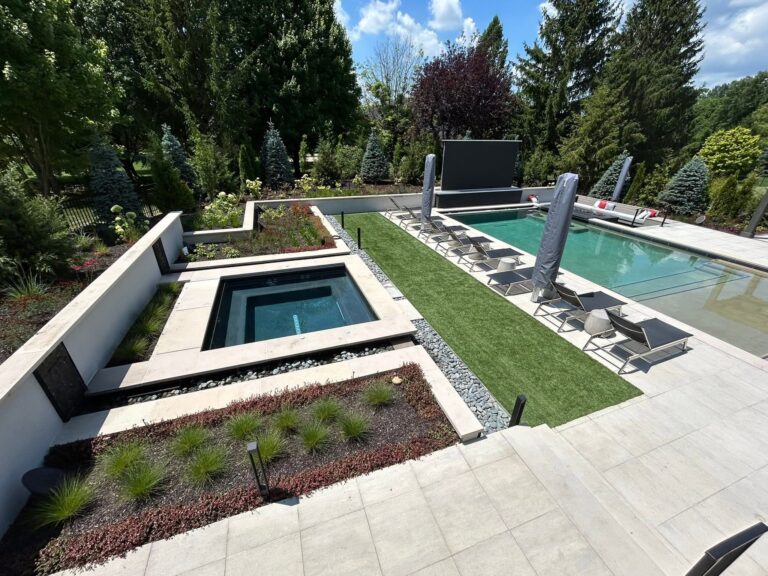
- Inground spa: Built into the ground like a pool, usually from gunite or fiberglass. It can stand alone or attach to a pool, often with a spillover edge into the pool.
- Jacuzzi: A brand name that has become a common word for any jetted spa or hot tub. If you’re searching for a “jacuzzi,” you’re shopping for one of the two options above.
Cost: Upfront Investment and Long-Term Value
Price depends on size, features, and site conditions, so the most useful comparison is what drives cost for each one:
- Hot tubs usually cost less upfront. Most of the price is the unit itself, plus a solid base and electrical work.
- Inground spas usually cost more because they’re custom construction: excavation, plumbing, finishes, decking, and equipment.
- Adding a spa to a new pool build is often more cost-effective than building a standalone spa. The spa can share the pool’s equipment and is built while the backyard is already under construction.
- Resale value works differently for each. A hot tub can go with you when you move. An inground spa stays with the home and becomes part of the property’s outdoor living space.
For a ballpark on a new pool, our Price Your Pool tool is a good place to start.
Installation: Timeline and Site Requirements
Hot tubs are much faster to install. For an inground spa, plan on a construction project.
Hot tub installation usually involves:
- A level, solid base, such as a concrete pad, pavers, or a deck built to carry the weight. A filled hot tub can weigh several thousand pounds.
- A dedicated electrical circuit. Most full-size hot tubs need a 240-volt GFCI-protected circuit installed by a licensed electrician.
- Clear access for delivery, through gates or around the side of the house.
Once those are in place, you can fill it and start using it within days.
Inground spa installation usually involves:
- Design and permitting
- Excavation, plumbing, and either shell construction or fiberglass shell placement
- Interior finish, coping, tile, and surrounding decking
- Equipment installation and startup
When an inground spa is part of a new pool, it’s built alongside the pool. Our post on how long it takes to build a custom pool in Indiana gives a good picture of the timeline.
Upkeep: What Ownership Looks Like Week to Week
Both need regular care, but the routine is different.
Hot tub upkeep:
- Small water volume, so chemistry shifts quickly and should be checked often
- Drain, clean, and refill every few months
- Rinse or replace filters on a regular schedule
- Keep the cover clean and in good shape, since it holds in heat
Inground spa upkeep:
- If it’s attached to a pool, it often shares the pool’s filtration and sanitation during swim season.
- It’s maintained alongside the pool through regular water care and service. Our weekly maintenance service can cover both.
- Heaters, pumps, and controls need occasional service, just like pool equipment. Our repair team handles heater, pump, and automation issues.
Year-Round Use: How Each Handles an Indiana Winter
Winter is when a spa gets the most use, so this matters.
- Hot tubs are built for cold weather. The insulated cabinet and tight-fitting cover hold heat well, so you can keep a hot tub running and ready all winter.
- Inground spas lose more heat to the surrounding ground and air, so they take more energy to keep warm in very cold weather. Many owners heat them on demand instead of keeping them hot all the time.
- Attached spas and winterization: If your spa shares equipment with your pool, using it in winter means planning how the system runs after the pool is closed. Talk this through during design if winter soaking is a priority.
- Freeze protection matters for both. Water must keep circulating in cold weather. A power outage or equipment failure during a hard freeze can damage plumbing on either type.
Design and Feel: How It Fits Your Backyard
- Hot tubs fit almost anywhere: a patio corner, a deck, or a spot near the back door for short winter walks.
- Inground spas become part of the landscape. They can match the pool’s finish, spill into the pool, and sit flush with the surrounding patio.
- Automation can bring the two closer together. With smart controls, you can heat an inground spa from your phone before you head outside.
For more ideas, see our posts on design trends for 2026 and design features to consider when planning a pool build this winter.
Real World Insight From the Field
At Barton Pool Company, we talk with homeowners every winter who are trying to decide between a hot tub and an inground spa. The decision usually comes down to timing and long-term plans more than features.
Homeowners tend to be happiest with a hot tub when:
- They want to enjoy it this winter, not next year
- A pool isn’t in the plans yet
- They want something they can take with them if they move
Homeowners tend to be happiest with an inground spa when:
- They’re building a pool or planning one in the near future
- They want the spa to feel like part of one connected backyard
- They plan to stay in the home for the long haul
FAQ: Hot Tubs and Inground Spas
Is a hot tub the same as a spa?
Yes, in everyday use. “Spa” is the broader term and covers both portable hot tubs and inground spas. “Hot tub” usually means a self-contained cabinet unit.
Is a jacuzzi the same as a hot tub?
Jacuzzi is a brand name that many people use for any hot tub or jetted spa. When people search for a jacuzzi, they usually mean a hot tub.
Can I use a hot tub all winter in Indiana?
Yes. Hot tubs are designed for year-round use. With a good cover and steady circulation, a hot tub can stay hot and ready through the coldest months.
Can I add an inground spa to my existing pool?
In many cases, yes. Adding a spa to an existing pool depends on layout, plumbing, and equipment capacity. A site visit is the best way to find out what your backyard can support. Our renovations team can walk you through the options.
Which costs more to run, a hot tub or an inground spa?
In cold weather, an inground spa usually uses more energy to heat because it loses more heat to the ground and air. A well-insulated hot tub with a good cover is usually more efficient to keep warm year-round.
Do I need a permit for a hot tub or inground spa?
An inground spa almost always requires a permit. A hot tub may need an electrical permit, and some communities have other requirements. Check with your local building department or HOA before you start.
Should I build an inground spa with a gunite or fiberglass pool?
Both can include a matching spa. Gunite offers the most design freedom, while fiberglass offers a faster install and a smooth, low-maintenance surface. Learn more about gunite pools and fiberglass pools.
Find the Right Spa for Your Backyard
Whether you want a hot tub you can use this winter or an inground spa built into a complete backyard design, Barton Pool Company can help you weigh your options. We’ve been serving homeowners across the greater Indianapolis area since 2007. Contact Barton Pool Company to start planning, or use our Price Your Pool tool to get a ballpark for a new pool.